Leadership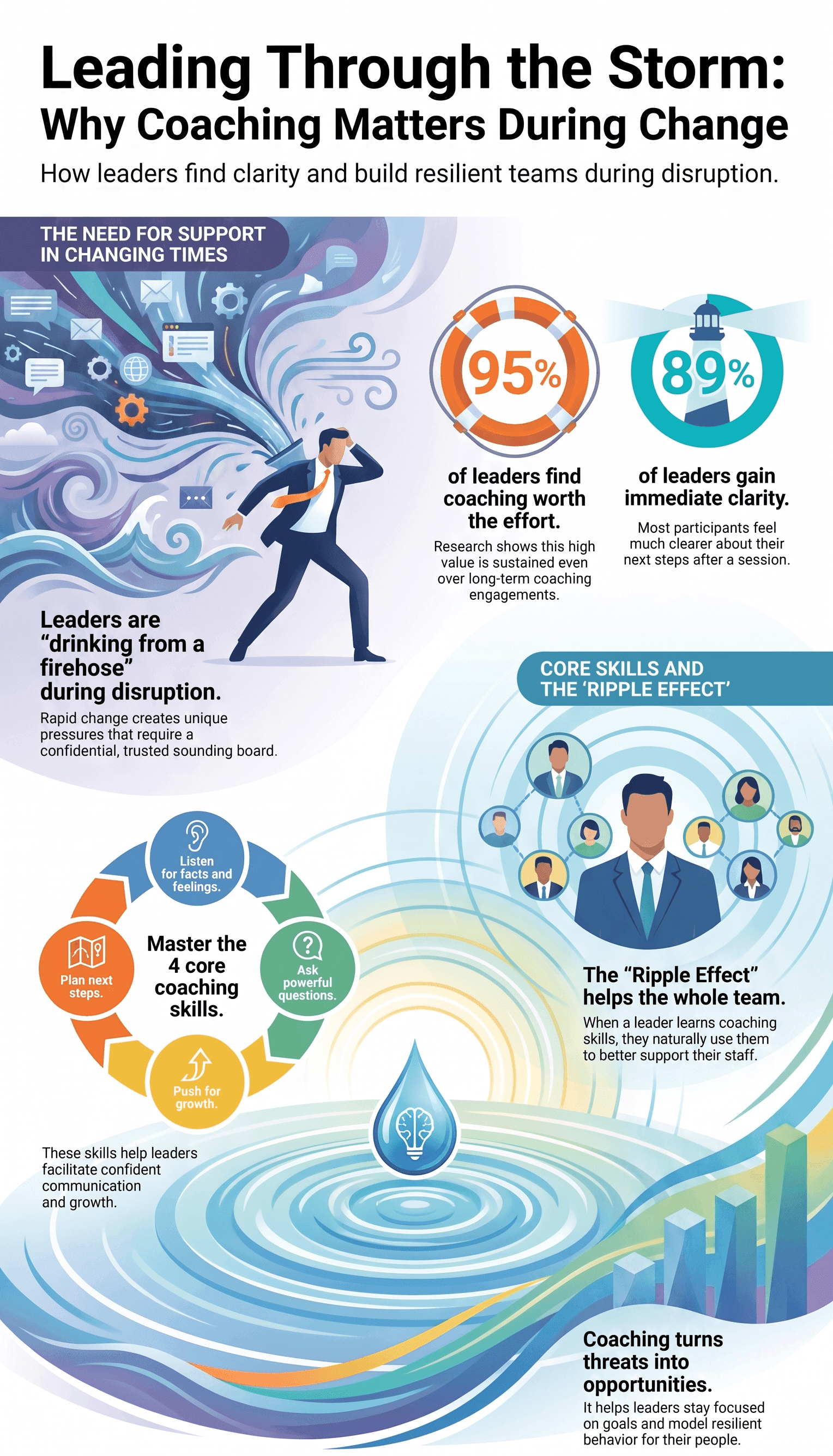
Leading through the storm
FFiras Ramadan·July 21, 2026·5 min read
The CEO’s Dilemma: Finding Clarity in the Firehose
The higher you climb, the more isolating the view becomes.
When your organization faces a sudden market shift or a systemic crisis, the firehose of information doesn't just hit your desk, it hits your decision-making capacity. As a leader, you are expected to be the calm center of that storm, yet you are often processing the same volatility as everyone else.
The reality is that at the executive level, you lose the luxury of having a sounding board. Peers are stakeholders, direct reports are looking for certainty, and boards require results.
This is the strategic utility of an executive coach. It is not about mentorship or training; it is about performance optimization.
Beyond the Sounding Board
Executive coaching is a high-level intervention designed to de-risk your decision-making process. By creating a vacuum-sealed environment for honest, critical inquiry, it allows you to:
a. Before you commit capital or organizational energy to a new pivot, you pressure-test your strategy against an objective peer who holds no equity in the outcome.
b. Emotional regulation under pressure is a competitive advantage. Coaches help you maintain the cognitive distance required to distinguish between noise and genuine signal.
c. The "Ripple Effect" is tangible. When you adopt the inquiry-based framework of a coach, deep listening, precision questioning, and actionable accountability, you hardwire that behavior into your leadership team.
Performance as Evidence
Data validates the ROI of this engagement. Executive presence and clarity are not soft skills; they are leadership metrics. When nearly 90% of leaders report immediate clarity post-session, the cost is not the session itself; it is the operational lag you avoid by making the right decision the first time.
Leadership is not just about stamina; it is about the quality of your output under the highest pressure.
For those currently navigating a complex transformation: How are you pressure-testing your strategic vision?
I’m interested in your perspective on whether you view coaching as a personal development tool or a necessary strategic asset. Let’s discuss below.