Career Coaching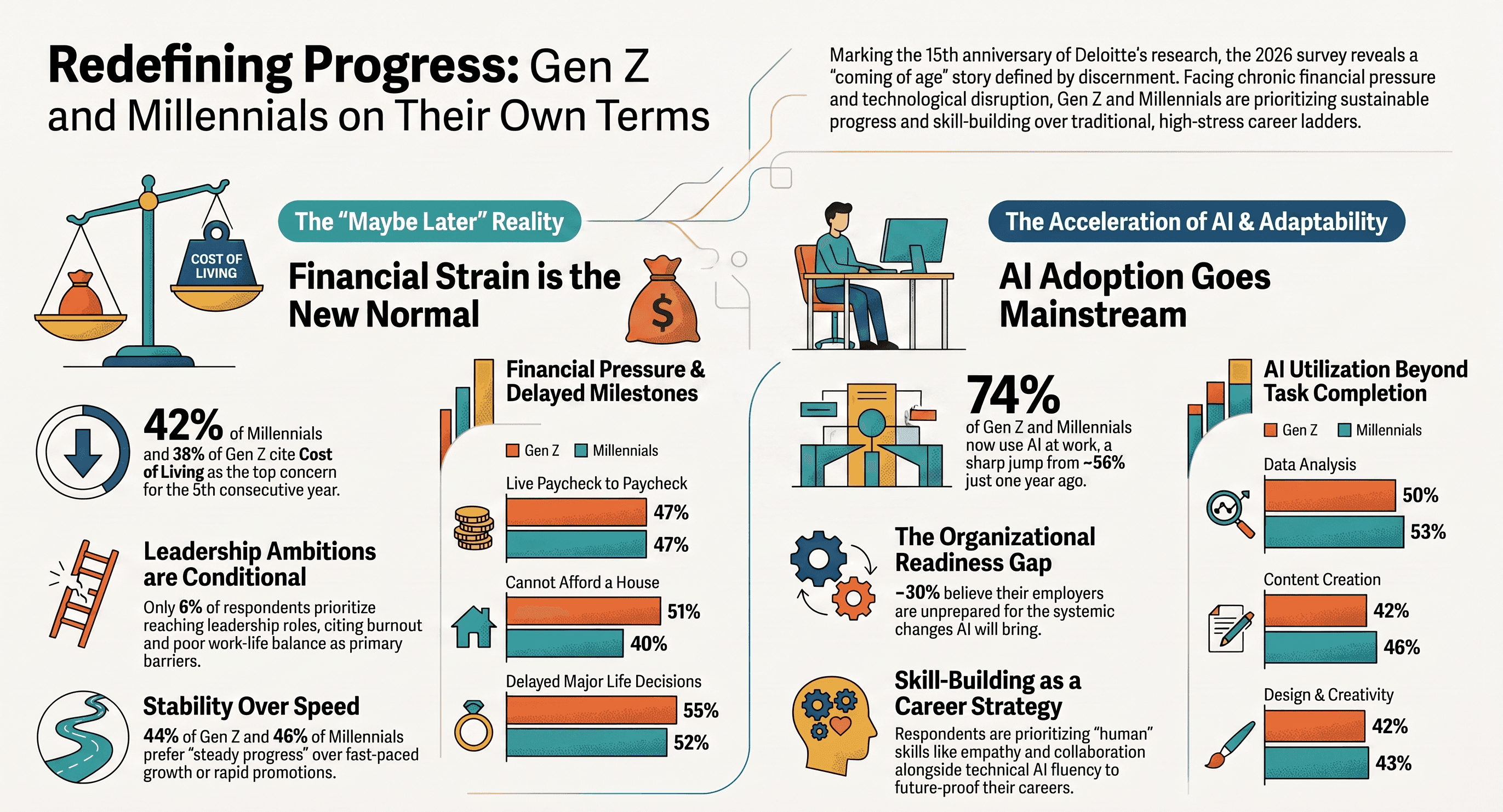
They're not lazy. They're not entitled. They're doing something smarter than we did.
WWael Mahfouz·July 19, 2026·5 min read
They're not lazy. They're not entitled. They're doing something smarter than we did.
I just went through Deloitte's newest global survey of 22,500+ Gen Zs and millennials, and one line stopped me:
Only 6% say reaching a leadership position is their top career goal.
My first instinct, as someone who's coached executives for years, was to think that's a problem, then I read why.
It's not that they don't want to lead. 76% say they do want senior leadership eventually. They're just refusing to accept the version of leadership most of us grew up with: the one that quietly demands your evenings, your weekends, and your peace of mind in exchange for a bigger title.
They watched their managers burn out chasing that title. And they said: not like that. Here's what stood out most, coach to coach:
1. They're not climbing. They're sequencing. Instead of racing up the ladder, they're building skills, stability, and well-being first, then deciding if leadership is worth the trade-off. It's not a lack of ambition. It's ambition with better risk management.
2. They still believe they can create change without the title. 69% believe they can influence their organization right now, from wherever they sit. That's a mindset shift every coach should be paying attention to. Impact is no longer tied to your position on the org chart.
3. Purpose isn't a nice-to-have anymore. It's the deal-breaker. 96% say purpose matters to their job satisfaction. 4 in 10 have walked away from a job or project because it didn't sit right with their values. If you're leading a team and can't clearly answer why does this work matter, you're going to lose your best people, quietly, and without warning.
4. Friendship at work isn't soft. It's strategic. People with a close friend at work are up to 18 points more likely to stay long-term. Retention isn't only about pay bands anymore. It's about whether people feel like they belong in the room.
So what does this mean if you're leading a team or building your own career right now?
If you're a leader; stop selling leadership as a reward for exhaustion. Show people it can come with boundaries, flexibility, and a real life outside of work, because that's the leadership they'll actually say yes to.
If you're building your own career; you don't need to apologize for wanting sustainable growth instead of a fast climb. Get clear on what success means to you specifically; not the version handed down to you, and build toward that, deliberately.
The workforce isn't disengaging from ambition. It's redefining what ambition is allowed to cost.
The leaders and organizations who understand that early will keep their best people. The ones who don't will keep wondering why nobody wants the corner office anymore.
Source: #Deloitte Global 2026 Gen Z and Millennial Survey