Leadership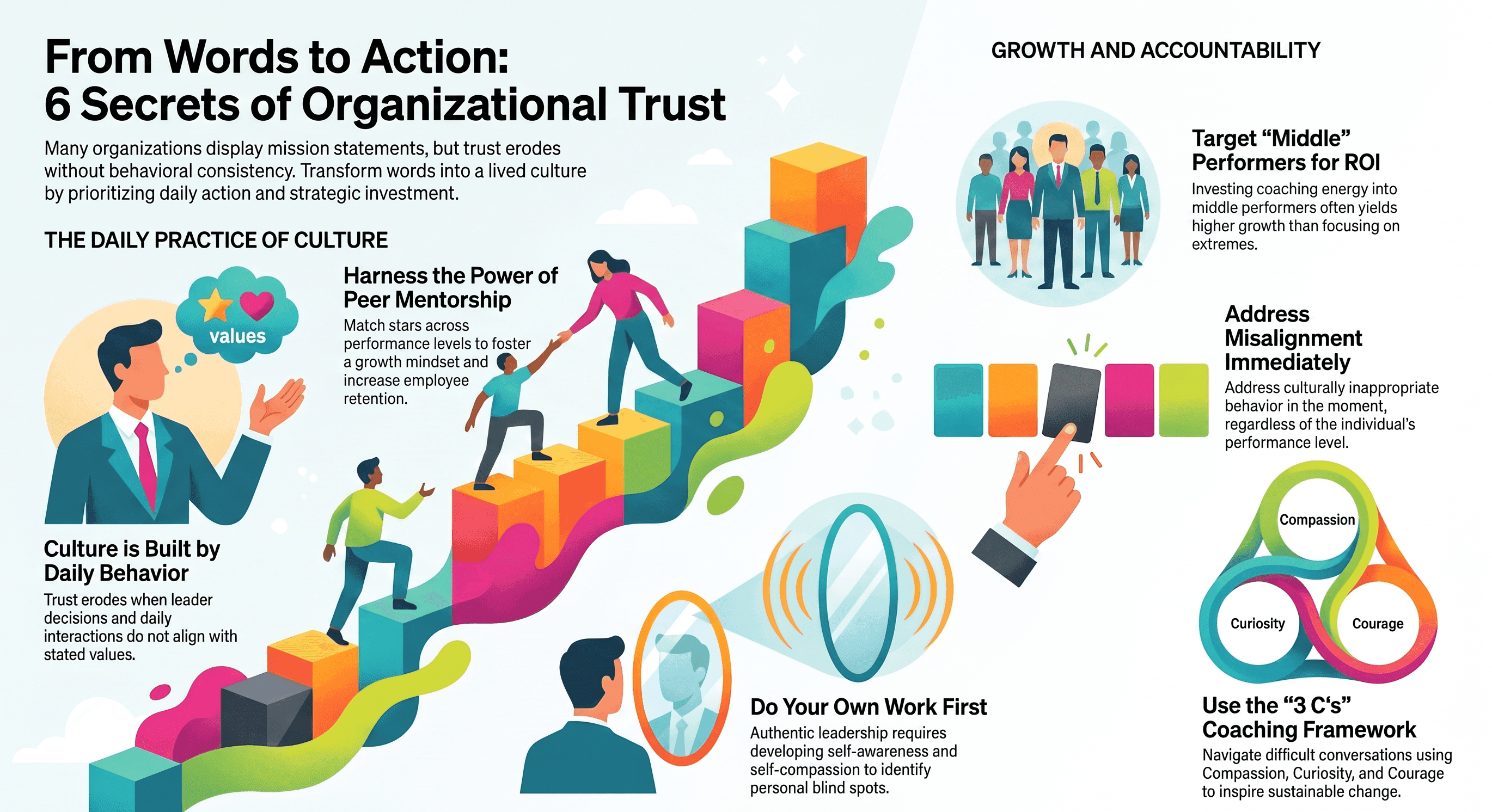
Trust isn't built in the mission statement. It's built in the moment you choose to say something (or stay quiet)!.
WWael Mahfouz·July 19, 2026·6 min read
Trust isn't built in the mission statement. It's built in the moment you choose to say something (or stay quiet)!.
I read something this week that stuck with me: most companies have beautiful values on the wall. Integrity. Respect. Growth. But walk the floor for a day, and you'll see the real culture, the one built in hundreds of small daily choices, not the framed poster in the lobby.
Here are 5 things that quietly separate leaders people trust from leaders people just tolerate:
1. Your team is watching what you do, not what you wrote.
Culture isn't a document. It's built in how you handle the awkward moment, the missed deadline, the disrespectful comment. Ask yourself honestly: what am I tolerating right now that I'd never accept from someone else?
2. Stop pouring all your energy into your problem people.
It's natural to spend most of your time firefighting with low performers. But your biggest ROI is often sitting quietly in the middle of your team, good people who are one mentor, one opportunity, or one honest conversation away from becoming great. Don't let them go unnoticed just because they're not causing problems.
3. Never let talent buy someone a pass on behavior.
This is the one that costs leaders the most trust. A brilliant performer who's dismissive, harsh, or disrespectful to others, and gets excused because (they're too valuable to lose), teaches your whole team one thing: results matter more than people. That message spreads fast, and it's expensive to undo.
4. Address it now. Not next week.
Not when I find the right words. When something's off, say so; respectfully, and never in front of others. Something as simple as: There's more here, let's talk about this properly today. Then come back with three things: Compassion, Curiosity, and Courage. Ask more than you tell. People change faster when they arrive at the insight themselves, not when it's forced on them.
5. Do your own work first.
Every leader has blind spots. The ones who lead with the most trust are the ones who've done the uncomfortable work of looking at themselves first, before they start correcting everyone else.
The real question isn't what do we say we value? It's what do we actually do when nobody's watching how it looks?
Which of these five hits closest to home for you as a leader? I'd love to hear your take.